
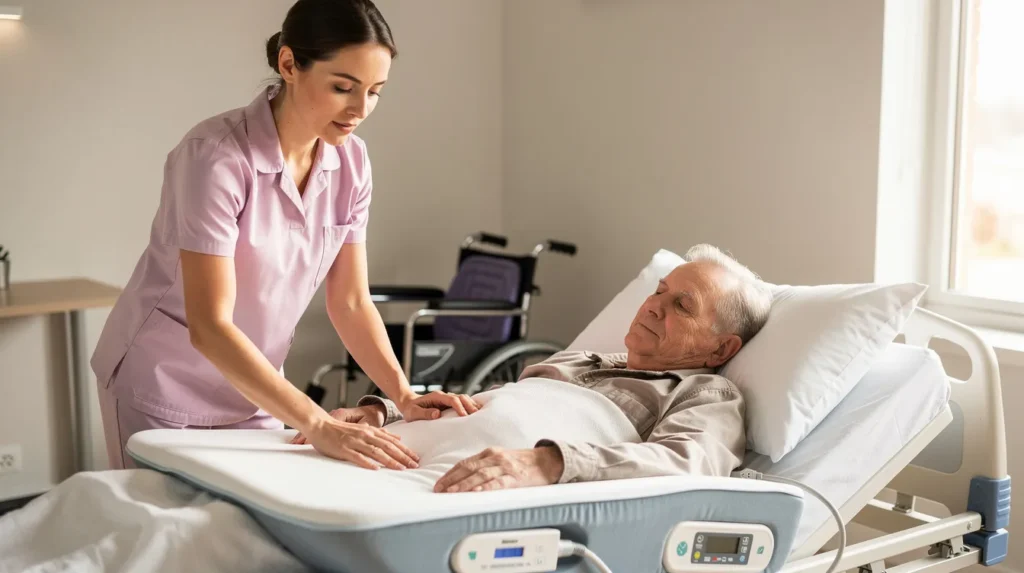
For decades, pressure injury prevention relied on a simple formula: reposition the patient regularly, use a basic foam or gel surface, and hope staff or caregivers catch problems before they progress. That approach still matters — but it’s no longer the whole story. A new generation of “smart” support surfaces is changing how we prevent wounds before they ever start, using sensors, dynamic air cells, and data instead of guesswork alone.
For caregivers, clinicians, and families managing mobility limitations at home or in care settings, understanding this shift isn’t just interesting — it can directly reduce suffering, hospitalizations, and long-term complications.
Why Support Surfaces Matter More Than People Think
Pressure injuries (also called pressure ulcers or bedsores) develop when sustained pressure on the skin cuts off blood flow to the tissue beneath it — typically over bony areas like the heels, hips, tailbone, and shoulder blades. What starts as mild redness can progress to deep tissue damage within hours if it isn’t caught early.
The people most at risk are often those who move the least: individuals using wheelchairs for extended periods, those recovering from surgery or injury, bariatric patients, and anyone with limited sensation or mobility. The surface someone sits or lies on for hours each day isn’t a minor detail — it’s one of the most important variables in whether a pressure injury develops at all.
What Makes a Support Surface “Smart”
Traditional support surfaces are static: a foam mattress or basic gel cushion that redistributes pressure passively. Smart support surfaces go further by actively responding to the person using them. Depending on the technology, this can include:
- Alternating pressure systems that inflate and deflate different zones on a cycle, continuously shifting where pressure is concentrated — reducing the need for frequent manual repositioning.
- Low air loss technology that regulates airflow and moisture at the skin’s surface, helping prevent the heat and humidity buildup that accelerates skin breakdown.
- Sensor-based pressure mapping that detects where pressure is building up in real time, alerting caregivers before redness even becomes visible.
- Auto-adjusting firmness that responds to a person’s weight distribution and movement, rather than requiring someone to manually set and reset firmness levels.
This matters because pressure injury risk isn’t static either — it changes with a person’s position, weight shifts, moisture levels, and time spent in one spot. A surface that adapts in real time addresses the actual mechanism of injury, not just the symptom.
Smart Technology in Mattresses
Mattress systems have seen some of the most significant advances. Powered low air loss and alternating pressure mattresses are now widely used not just in hospitals, but in long-term care and increasingly in home care settings, particularly for individuals who are bed-bound for extended periods or recovering from stage I–IV pressure injuries.
If you’re researching options for a loved one who spends significant time in bed, it’s worth exploring the range of pressure-relief mattress technology available, including alternating and low air loss systems designed specifically around skin protection rather than general comfort.
Smart Technology in Seating
Wound prevention isn’t limited to beds. For wheelchair users, the seat cushion is just as critical — arguably more so, since many wheelchair users spend 10+ hours a day seated. Modern wheelchair cushions now incorporate pressure-mapping gel zones, adjustable air cells, and materials engineered specifically to redistribute weight away from high-risk areas like the ischial tuberosities and sacrum.
Choosing the right cushion isn’t a minor accessory decision — it’s one of the most effective wound-prevention tools available for seated individuals. Our wheelchair cushion selection and pressure relief guide breaks down the different cushion types, when each is appropriate, and how to match a cushion to someone’s specific risk level.
Why Bariatric Care Needs Its Own Approach
Smart support surface technology is especially important — and often overlooked — for bariatric individuals. Higher body weight concentrates pressure differently, increases shear forces during repositioning, and raises the risk of skin breakdown in skin folds as well as bony prominences. Standard mattresses and cushions frequently aren’t rated or designed to distribute pressure safely at higher weights.
This is a case where equipment genuinely needs to be purpose-built, not just “heavy-duty” by name. Our bariatric mobility equipment guide covers what to look for in reinforced frames, wider surfaces, and support systems specifically engineered for safe, effective pressure redistribution at higher weights.
Seating Outside the Bed: Lift Chairs and Recliners
A lot of wound-prevention focus goes to beds and wheelchairs, but everyday seating matters too — especially for people who spend long stretches in a favourite chair during the day. The wrong seating setup can quietly undermine even a great mattress or cushion strategy by leaving someone in a poor position for hours.
Look for seating with adjustable positioning, pressure-conscious cushioning, and safe sit-to-stand mechanics. Our guide to lift chairs and power recliners explains which features actually support skin health and safe mobility, rather than comfort alone.
What This Means for Caregivers
The biggest shift smart support surfaces bring isn’t just better materials — it’s earlier intervention. Sensor-based systems and pressure-mapping technology mean problems can be caught at the earliest, most reversible stage, rather than after visible skin damage has already occurred. For caregivers managing someone at home, this can mean the difference between a minor skin concern resolved in days and a serious wound requiring weeks or months of treatment.
That said, technology doesn’t replace good care habits. Regular repositioning, skin checks, proper hydration, and nutrition all remain essential. Smart surfaces are a powerful layer of protection — not a substitute for attentive care.
Choosing the Right Surface for Your Situation
Before selecting a mattress, cushion, or chair, consider:
- How many hours per day is the person in this position?
- What is their current skin condition and pressure injury risk level?
- Are there existing wounds, or is this purely preventive?
- Does weight, body shape, or mobility level require specialized equipment?
Getting these answers right — ideally with input from a healthcare provider or occupational therapist — makes it far easier to choose equipment that actually matches the level of risk involved.
Pressure injury prevention has moved well beyond basic foam padding. Smart support surfaces — whether in mattresses, wheelchair cushions, or everyday seating — use real-time responsiveness to address the root cause of skin breakdown before it starts. For anyone caring for a loved one with limited mobility, understanding these options is one of the most impactful steps toward better long-term outcomes.
If you’re evaluating support surface options for your situation, browse our full range of pressure relief and mobility products or reach out to our team for personalized guidance.
To visit our Social Media, please click on Facebook and Instagram