
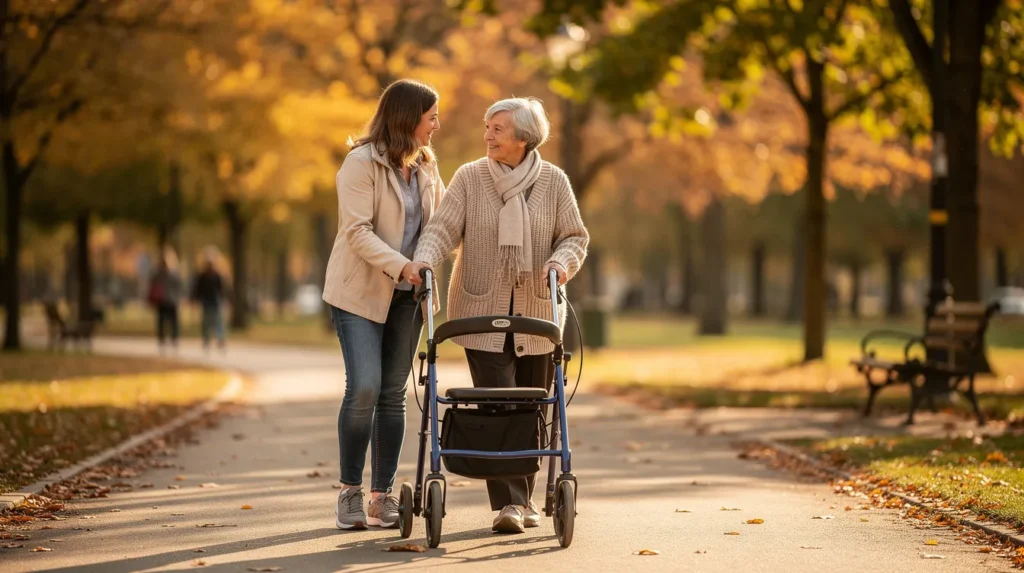
Autumn brings crisp air, shorter days, and — for seniors and people with mobility challenges — a noticeable rise in fall-related injuries and health risks. Wet leaves, earlier darkness, colder joints, and the seasonal cold and flu wave all show up at once. The good news is that most autumn hazards are entirely preventable with a few intentional habits. Here’s what to focus on this season to stay safe, active, and healthy.
1. Rethink Your Footing — Literally
Falls spike in autumn for a simple reason: wet leaves, morning frost, and rain-slicked sidewalks turn ordinary walking surfaces into hazards almost overnight. Add shorter daylight hours, and visibility drops right when the ground gets riskier.
- Choose footwear with solid tread and good ankle support — no smooth-soled slippers or shoes for outdoor errands.
- Clear leaves, twigs, and debris from your porch, steps, and walkway regularly. Wet leaves are as slippery as ice.
- If you use a cane, walker, or rollator, check the rubber tips and wheels now. Worn tips lose grip exactly when you need it most.
If your current walker or rollator isn’t giving you the stability it used to, autumn is the right time to reassess. Our guide on choosing the right walker or rollator breaks down which style suits different terrains and stability needs — worth a read before the first frost hits.
2. Don’t Let Shorter Days Shrink Your Activity
As daylight hours shrink, it’s tempting to move less — and for older adults, reduced activity can quickly lead to stiffness, weaker balance, and a higher fall risk down the line. Staying mobile through autumn is one of the best things you can do for both physical and mental health.
- Schedule outdoor walks earlier in the day when light and temperatures are better.
- Keep up strength and balance exercises indoors on darker or rainy days — even 10–15 minutes helps.
- If distance or stamina has become harder to manage, a mobility scooter can keep you independent and active without overexertion, especially for errands, appointments, or visits with family.
Not sure which option fits your needs? Our complete guide to mobility scooter types for Canadian users covers everything from portable folding models to heavier-duty scooters built for uneven ground.
3. Protect Your Skin as Activity Levels Drop
Cooler weather often means more time indoors and more time seated — whether in a wheelchair, recliner, or favourite armchair. Combined with drier autumn air, this raises the risk of skin breakdown and pressure injuries, particularly for anyone with limited mobility.
- Shift position regularly if you’re seated for long stretches.
- Moisturize regularly; indoor heating dries out skin faster than most people expect.
- Check pressure points (heels, hips, tailbone) for redness or tenderness, especially if sensation is reduced.
If it’s been a while since you evaluated your seating setup, it’s worth revisiting. Our wheelchair cushion selection and pressure relief guide explains how the right cushion can prevent skin issues before they start — something that matters even more once outdoor activity naturally decreases.
4. Prepare Your Home for Longer Indoor Hours
With more time spent at home as temperatures drop, your living space becomes your main environment for weeks at a time. A few adjustments now can prevent accidents and make those months far more comfortable.
- Improve lighting in hallways, stairwells, and entryways — earlier evenings mean more time navigating in low light.
- Secure loose rugs and cords that become tripping hazards, especially with wet or muddy shoes coming and going.
- Make sure furniture you rely on daily — like a favourite chair — actually supports you safely getting in and out.
If standing up from a seated position has become harder or riskier, a proper lift chair can make a meaningful difference in daily safety and independence. See our complete guide to lift chairs and power recliners for what to look for beyond comfort — including safety features that matter for fall prevention.
5. Get Ahead of Cold and Flu Season
Autumn marks the start of flu season, and for seniors or those with underlying health conditions, prevention matters more than treatment.
- Book your flu shot early — protection takes about two weeks to build.
- Wash hands frequently, especially after outings or visits.
- Keep indoor spaces well-ventilated even as windows start closing for the season.
- Watch for vitamin D dips as sunlight exposure decreases; talk to your doctor about supplementation if needed.
6. Dress in Layers, Not Just Warmly
Temperature swings are extreme in autumn — a 15°C morning can turn into a 5°C evening. Layering isn’t just about comfort; it helps regulate body temperature safely, which matters more for older adults whose bodies adjust to temperature changes more slowly.
- Keep a light jacket or shawl accessible even on mild days.
- Warm extremities (hands, feet, head) first — heat loss happens fastest there.
- Avoid bulky outerwear that restricts movement or balance while walking or using mobility aids.
7. Review Your Equipment and Funding Before Winter Hits
Autumn is the ideal window to update or repair mobility equipment before winter weather makes appointments and deliveries harder to schedule. If you’re in Alberta, this is also a good time to check what funding support might be available for new or replacement equipment.
Our guide to understanding AADL funding in Alberta explains eligibility and how to get started — worth reviewing now rather than waiting until winter creates more urgency.
Autumn safety comes down to a few consistent habits: watch your footing, stay active despite the shorter days, care for your skin and seating, prepare your home for more indoor time, and get ahead of flu season. None of these require major lifestyle changes — just a bit of seasonal awareness and the right equipment to support you.
If you’re unsure whether your current mobility equipment is ready for the season ahead, browse our full range of mobility and home safety products or reach out to our team for guidance.
To visit our Social Media, please click on Facebook and Instagram