
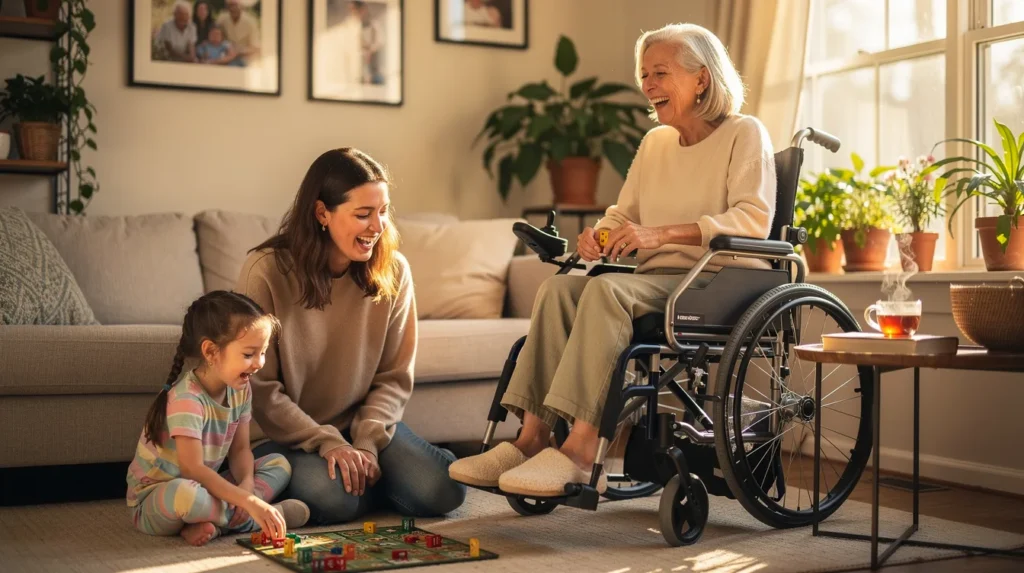
Mobility equipment changes lives — but it only solves part of the equation. A wheelchair, scooter, or walker can restore independence and physical safety, yet the emotional side of living with reduced mobility often gets far less attention. Mental health and meaningful relationships matter just as much to quality of life as the equipment itself, and they don’t improve automatically just because movement does.
For individuals adjusting to new mobility needs — and the caregivers supporting them — it’s worth treating emotional wellbeing as its own priority, not an afterthought.
Why Mobility Alone Isn’t Enough
Getting the right mobility equipment solves a logistical problem: how to move safely and independently. But adjusting to a new mobility device, a changed routine, or a visible disability often brings emotional weight that doesn’t disappear once the physical need is addressed — frustration, grief over lost independence, self-consciousness in public, or simply the mental fatigue of navigating a world not built with you in mind.
If you’ve noticed persistent low mood, withdrawal, irritability, or a loss of interest in things that used to matter, that’s worth taking seriously — not dismissing as “just part of adjusting.” Emotional health deserves the same deliberate attention as physical health.
We’ve written in depth about how isolation develops for mobility equipment users and why social connection matters so much in our mental health and social connection guide. This post builds on that by focusing on practical, everyday ways to nurture both mental wellness and relationships — not just understand the problem, but act on it.
Rebuild Routine Around What You Enjoy, Not Just What You Need
It’s easy for life to narrow down to logistics — appointments, equipment checks, managing symptoms — and lose room for things that are simply enjoyable. Protecting time for hobbies and interests isn’t a luxury; it’s a meaningful part of mental health.
- Revisit old hobbies in an adapted form rather than assuming they’re off the table. Gardening, art, cooking, and music can almost always be modified.
- Try something new that fits your current abilities, rather than only grieving what’s changed.
- Build a small routine around something enjoyable each week, even if it’s modest — consistency matters more than scale.
Physical positioning plays a bigger role in this than people expect. Being stuck low in a chair or bed for long periods can make it harder to engage in hobbies, conversations, or even eye-level interaction with others. Our guide to standing frames and standers explains how therapeutic standing can support both physical health and the simple ability to interact with the world at eye level — which matters more for mood and connection than people often realize.
Make It Easier to Say Yes to Invitations
One of the quietest contributors to isolation is simply the effort required to leave the house. When getting ready, navigating stairs, or managing uneven ground feels exhausting or risky, it becomes easier to decline invitations — and over time, people stop asking.
- Choose mobility aids that match your actual environment, not just your home. A walker that works well indoors may struggle outdoors on grass, gravel, or curbs.
- Keep a “ready to go” bag or routine so leaving the house takes less mental effort.
- Be honest with friends and family about what kind of outings work for you — a quiet coffee may be easier to say yes to than a long event, and that’s a completely reasonable boundary.
If getting around has started to feel harder than it should, it may be time to reassess your equipment. Our guide on choosing the right walker or rollator covers which features actually make outdoor and social mobility easier, not just indoor movement.
Address the Home Barriers That Quietly Limit Connection
Sometimes the biggest obstacle to connection isn’t motivation — it’s the front step. If entering or leaving your own home is physically difficult, it affects how often you go out and how often others comfortably visit you.
- Assess entryways, not just interior spaces, for accessibility.
- Look into funding support if cost has been a barrier to home modifications.
- Remember that accessibility improvements benefit visitors too — aging parents, friends using mobility aids, or anyone who struggles with stairs.
If a step, threshold, or staircase has become a barrier, our guide to home accessibility solutions, including vertical platform lifts and RAMP funding in Alberta, covers how to remove that barrier — and what financial support may be available to help cover it.
Strengthen Relationships With Caregivers and Family
Relationships with caregivers and close family often shift when mobility needs change — sometimes becoming more transactional (appointments, tasks, logistics) and less about genuine connection. Protecting the relationship itself matters.
- Set aside time together that isn’t about care tasks — a shared show, a game, a regular phone call.
- Encourage caregivers to maintain their own social connections and downtime; caregiver burnout affects both people in the relationship.
- Say explicitly when something is helpful or appreciated — small acknowledgments go a long way in sustaining caregiving relationships over time.
Use Technology to Stay Connected, Not Replace Connection
Video calls, messaging apps, and online communities can meaningfully reduce isolation, especially on days when leaving the house isn’t realistic. The key is using technology as a bridge to connection, not a substitute for it.
- Schedule regular video calls with distant family rather than waiting for spontaneous contact.
- Look for online communities specific to your condition or mobility needs — shared experience often builds connection faster than general social groups.
- Balance digital contact with in-person time where possible; both serve different emotional needs.
When to Seek Additional Support
If feelings of isolation, sadness, or anxiety are persistent rather than occasional, it’s worth talking to a doctor or mental health professional. Adjusting to mobility changes is genuinely difficult, and professional support — whether counselling, a support group, or occupational therapy focused on community reintegration — isn’t a sign of failure to cope. It’s a normal and often necessary part of the process.
Mobility equipment addresses movement, but mental health and meaningful relationships need their own attention and effort. Small, consistent steps — protecting time for hobbies, making outings easier, addressing home barriers, and nurturing key relationships — add up to a meaningful difference over time. Mobility is the foundation; connection and wellbeing are what make life on top of it worth living.
If equipment is part of what’s standing between you and an easier, more connected life, browse our full range of mobility and accessibility solutions or reach out to our team for guidance.
To visit our Social Media, please click on Facebook and Instagram