
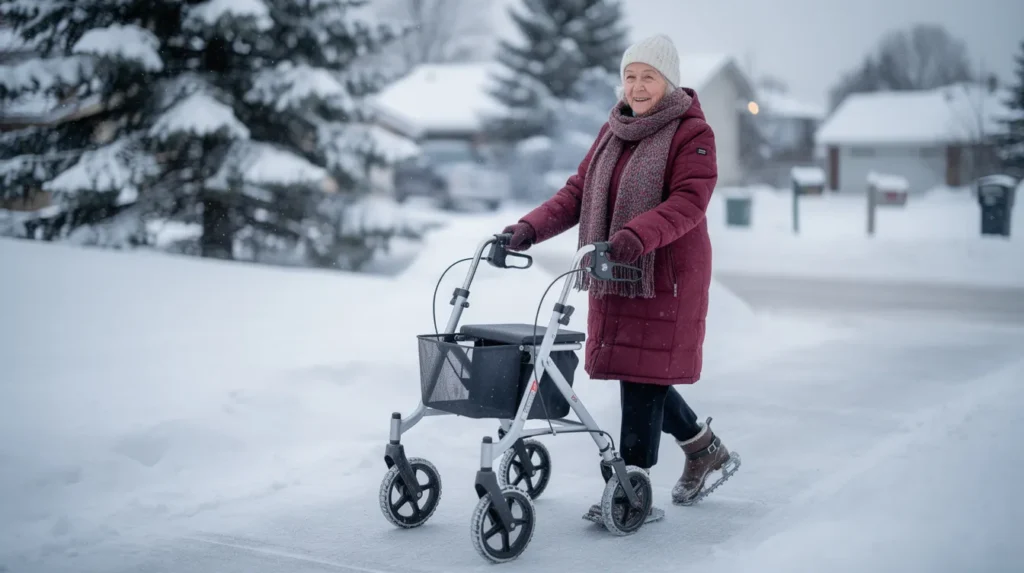
Every Canadian winter, emergency rooms fill with the same story: a patch of ice, a wet floor, one quick step, and a fall that changes everything. Falls are the leading cause of injury-related hospitalization among Canadian seniors, and the risk climbs when sidewalks freeze and daylight disappears by late afternoon.
Caution alone is not enough. The right equipment turns a risky routine into a safe one, and most of it is simple, affordable, and easy to start using right away. Here are ten pieces of fall prevention and mobility gear worth having before the deep freeze arrives.
Outdoor Essentials: Gear for Ice and Snow
1. Ice Grippers and Winter Footwear
Good traction starts at ground level. Choose insulated, waterproof boots with a wide, low heel and a deep rubber tread. For icy days, slip-on ice cleats add metal studs or coils that bite into the surface. Remember to take them off indoors, since cleats are slippery on tile and hardwood.
2. Ice Tips for Canes and Walkers
A standard rubber cane tip slides on ice. A flip-down ice pick attachment grips frozen ground and folds up when you step inside. Replace worn rubber tips on canes and walkers at the same time. If the tread pattern is smooth, the tip is finished.
3. A Winter-Ready Walker or Rollator
Small indoor wheels struggle in snow and slush. A rollator with larger wheels, reliable hand brakes, and a built-in seat handles uneven winter ground far better and gives you a place to rest when the cold tires you out. Have the brakes checked at the start of the season and wipe the frame down after salty outings.
4. Handrails, Ramps, and Porch Lifts
The front steps are the most dangerous part of most homes in winter. Solid handrails on both sides are the minimum. A ramp with a non-slip surface helps walker and wheelchair users, and a vertical platform lift removes the stairs from the equation altogether. Add motion-activated lighting so no one has to find the keyhole in the dark.
Indoor Essentials: Gear for the Home
Winter moves life indoors, and that is where most falls actually happen. Our full range of fall prevention equipment is a good starting point for seeing what is available.
5. Grab Bars
Properly anchored grab bars beside the toilet, in the shower, and at entry steps give a firm handhold exactly where balance is tested. Towel racks and suction-cup handles are not substitutes, because they are not built to hold body weight.
6. Shower Chairs, Commodes, and Bath Safety Aids
Wet surfaces and stiff winter joints are a bad combination. A shower chair or tilt commode lets you bathe seated, a handheld shower head brings the water to you, and a non-slip mat adds grip underfoot. A raised toilet seat reduces the effort of sitting and standing. Browse our bathroom safety products to compare options.
7. Bed Rails and Transfer Poles
Getting out of a warm bed on a cold, dark morning is a common moment for falls. A bed rail or floor-to-ceiling transfer pole gives steady support for sitting up, standing, and turning. Pair it with a night light path from the bed to the bathroom.
8. Entry Mats and Boot Trays
It sounds too simple to matter, but melted snow on a smooth floor is one of the top causes of indoor winter falls. Place an absorbent, rubber-backed mat and a boot tray at every entrance, and keep a sturdy chair nearby for putting boots on and off while seated.
Mobility and Transfer Gear: When More Support Is Needed
9. The Right Wheelchair or Power Add-On
For seniors who tire easily or cannot safely walk longer distances in winter, a wheelchair keeps outings possible. Fit matters more than features: seat width, cushion, weight capacity, and tire type all affect safety and comfort. A power add-on can help a manual wheelchair user manage slopes and longer distances without strain.
You can explore the choices in our mobility equipment category. Before you buy, read our guide on what questions to ask your dealer before you buy a wheelchair so you get a chair that suits your body and your home.
10. Patient Lifts and Slings
When a senior needs help moving between bed, chair, and bathroom, manual lifting puts both the person and the caregiver at risk. A floor lift or ceiling lift with a properly fitted sling makes transfers controlled and dignified. For family caregivers, it is often the piece of equipment that makes caring at home sustainable through a long winter.
How to Choose the Right Gear
Not every senior needs all ten items. Start with these steps:
- Look at the near misses. Where has a slip, stumble, or “close call” already happened? Fix that spot first.
- Get a professional assessment. An occupational therapist can match equipment to the person’s strength, balance, and home layout.
- Prioritize fit and installation. A walker at the wrong height or a grab bar screwed into drywall can create new hazards.
- Ask about funding. In Alberta, the Aids to Daily Living (AADL) program helps cover many approved items, including lifts, wheelchairs, and commodes.
- Maintain what you own. Check tips, brakes, batteries, and fasteners every few weeks during winter.
Winter safety for seniors comes down to preparation. Traction outdoors, solid support indoors, and the right mobility equipment for longer distances and transfers remove the most common causes of winter falls. Start with the highest-risk spots, add gear as needs change, and get expert advice on fit.
The LIFEmed team and our dealer network across Alberta can help you choose the right equipment and guide you through funding, so you or your loved one can stay steady, independent, and confident all winter long.
To visit our Social Media, please click on Facebook and Instagram