
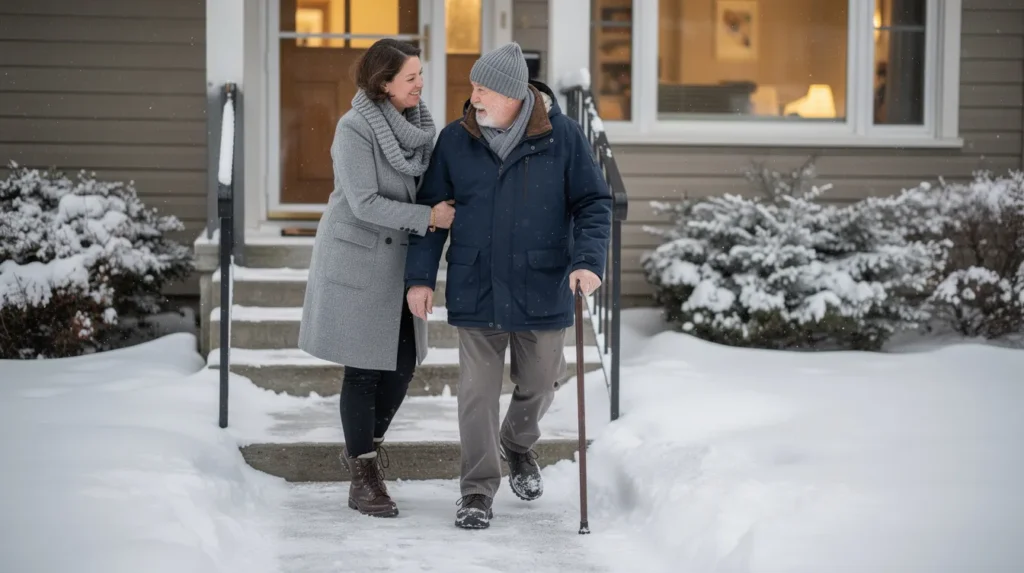
The first snowfall feels magical until you picture your 78-year-old mother carrying groceries up an icy front step. For adult children across Canada, winter brings a specific kind of worry: a parent who was perfectly independent in September suddenly faces frozen walkways, dark afternoons, and a furnace that may or may not be keeping up.
The good news is that most winter risks for seniors are predictable, which means they are preventable. Here are nine practical ways to protect elderly parents during the winter months, from the front door to the bedroom.
1. Treat Icy Walkways as the Number One Threat
Falls are the leading cause of injury-related hospital stays for Canadian seniors, and winter sharply raises the odds. A hip fracture at 80 can mean months of recovery and a permanent loss of independence.
Start outside. Arrange reliable snow removal before the first storm, keep pet-safe ice melt by both doors, and install sturdy handrails on every exterior step. Add bright, motion-activated lighting over the entrance, since many falls happen at dusk when ice is hardest to see.
If the front steps have become a daily struggle, a porch lift or vertical platform lift removes the stairs from the equation entirely. It is one of the most effective investments for a parent who wants to stay in their own home.
2. Make Indoor Falls Just as Preventable
Winter moves most of life indoors, and wet boots, loose rugs, and dim hallways turn the home itself into a hazard. Walk through your parents’ house with fresh eyes. Place an absorbent mat inside each entrance, remove or tape down throw rugs, and add night lights along the route from bedroom to bathroom.
The bathroom deserves special attention. Grab bars beside the toilet and in the shower, a non-slip bath mat, and a raised toilet seat or shower commode reduce the strain of the two most dangerous daily transfers. Browse the fall prevention equipment available for the bathroom and bedroom to see what a few targeted changes can look like.
3. Keep the House Warm Enough, Not Just “Fine”
Older adults lose body heat faster and often do not feel cold until their core temperature has already dropped. Hypothermia can begin indoors in a home kept at 18°C or below, and common medications can blunt the body’s response even further.
Set the thermostat to at least 20°C and resist the urge to let a parent “save money” by turning it down. Have the furnace serviced, replace filters, and encourage layered clothing and a heated blanket (never a hot water bottle in bed). Any space heater must have tip-over protection and automatic shutoff.
4. Watch for Carbon Monoxide and Fire Risks
Closed windows plus more heating means more exposure to carbon monoxide. Install a CO detector on every level, test it monthly, and keep chimneys and furnace exhausts clear of snow. Check smoke detectors at the same time, and consider a stove with an automatic shutoff for a parent with memory changes.
5. Plan for Power Outages Before They Happen
Winter storms knock out power, and a dark, cooling house is dangerous for a senior who relies on an electric lift, oxygen concentrator, or a mobility device that needs charging. Build a simple emergency kit: flashlights, extra blankets, bottled water, three days of medication, and a charged power bank. Know how each piece of equipment behaves without electricity, and ask whether the utility offers priority reconnection for medically dependent customers.
6. Protect Them From Winter Illness
Flu, RSV, and COVID-19 hit older adults harder, and pneumonia is a leading reason seniors end up in hospital each winter. Book vaccinations early, keep hand sanitizer at the door, and ask visitors with colds to stay home. Encourage fluids, since dehydration is common in dry, heated homes and causes the dizziness that leads to falls.
Shorter days also affect mood. Isolation and reduced activity feed on each other, so a daily phone call and a safe plan to get out of the house matter as much as any medical precaution.
7. Keep Them Moving, Safely
Strength and balance decline quickly when a parent stops walking because the sidewalks are icy. Help them find an indoor alternative: a mall walking group, chair exercises, or a short daily routine at home. If a walker, rollator, or wheelchair is their main link to activity, make sure it is winter-ready, with grippy tires, checked brakes, and a plan for snow and thresholds.
Our earlier guide on staying healthy and safe through autumn covers the pre-winter checklist in detail if you are starting late.
8. Rethink the Home for Long-Term Independence
Winter often reveals what a home is missing. If your parent is avoiding the basement laundry, skipping showers because the tub feels unsafe, or struggling to get in and out of bed, those are signals, not quirks. An occupational therapist can assess the home and recommend specific daily living aids, from transfer poles to ceiling lifts, that let a parent stay where they want to be. Our 2026 guide to aging in place explains how that process works and which changes deliver the biggest gains.
9. Don’t Let Cost Stop the Conversation
Many families assume mobility and safety equipment is out of reach financially. In Alberta, the Aids to Daily Living (AADL) program and other funding sources cover a significant portion of approved equipment, including lifts, wheelchairs, commodes, and transfer aids. Learn how the process works and what qualifies on our funding information page before you rule anything out.
A Winter Safety Checklist for Elderly Parents
Print this and go through it together:
- Snow removal arranged and ice melt at both doors
- Handrails and motion lighting on exterior steps
- Rugs removed, night lights installed, entry mats in place
- Grab bars and non-slip surfaces in the bathroom
- Thermostat at 20°C or higher, furnace serviced
- CO and smoke detectors tested
- Emergency kit with medications and backup power plan
- Vaccinations up to date, fluids encouraged
- Indoor exercise plan and winter-ready mobility aids
- Home assessment booked and funding options explored
Protecting elderly parents during winter is not about wrapping them in bubble wrap. It is about removing the predictable hazards so they can keep doing what they love, on their own terms. Start with the steps and the bathroom, keep the house warm, prepare for the storm that will eventually come, and bring in professional help where the home itself needs to change.
If you are not sure where to begin, the LIFEmed team and our network of dealers and clinics across Alberta can help you find the right equipment and navigate funding. A safer winter starts with one conversation.
To visit our Social Media, please click on Facebook and Instagram