
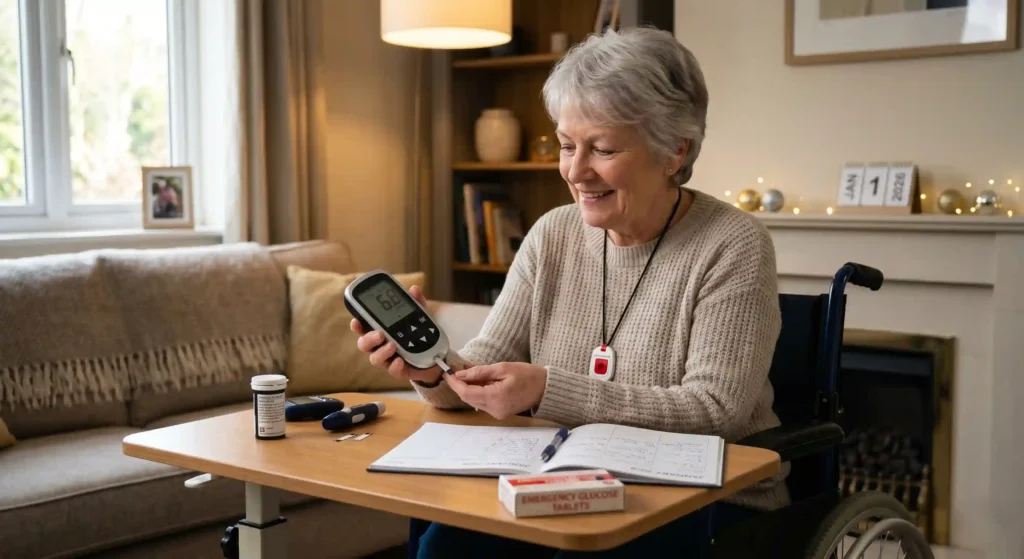
Managing diabetes effectively in 2026 requires more than standard blood glucose monitoring, especially for seniors and mobility aid users who face unique challenges accessing traditional testing methods, maintaining consistent monitoring schedules, and managing emergency situations independently. Creating comprehensive diabetes management systems that accommodate physical limitations, mobility restrictions, and accessibility needs becomes essential for maintaining health independence while preventing dangerous complications that could compromise overall quality of life and mobility capabilities. At LIFEmed, we understand that successful diabetes management for individuals using wheelchairs, walkers, and other mobility aids requires specialized equipment, environmental modifications, and emergency protocols that address the intersection of diabetes care and accessibility needs while promoting continued independence and community participation.
Accessible Blood Glucose Testing Equipment and Techniques
Traditional diabetes testing equipment often presents significant challenges for individuals with limited dexterity, visual impairments, or mobility restrictions that affect their ability to handle small testing strips, operate compact devices, or maintain steady hand positions during testing procedures. Large-button glucose meters with audio feedback accommodate visual impairments and dexterity limitations, providing clear verbal readings that eliminate squinting at small display screens or struggling to interpret numerical results. Talking glucose meters announce test results, timing instructions, and error messages, enabling independent testing for individuals with vision challenges that would otherwise require caregiver assistance.
Ergonomic lancet devices with adjustable depth settings accommodate varying skin thickness and sensitivity levels while reducing the force required for operation, particularly important for individuals with arthritis, limited grip strength, or hand tremors that interfere with traditional spring-loaded devices. Alternative site testing capabilities enable glucose monitoring from forearm, palm, or thigh locations when finger testing becomes difficult due to circulation problems, nerve damage, or repeated testing calluses common in long-term diabetes management.
Continuous glucose monitoring systems eliminate the need for frequent finger sticks while providing real-time glucose information that proves especially valuable for wheelchair users whose activity patterns and circulation changes might affect blood sugar stability. These systems offer smartphone connectivity enabling family members or caregivers to monitor glucose trends remotely, providing safety nets for individuals living independently while managing complex medical conditions. LIFEmed’s adaptive equipment specialists understand how mobility limitations impact diabetes testing and recommend solutions that promote independence while maintaining accuracy essential for safe diabetes management.
Wheelchair-Accessible Testing Stations and Environmental Modifications
Creating dedicated diabetes testing stations that accommodate wheelchair access, proper lighting, and organized supply storage eliminates barriers that could prevent consistent monitoring while promoting systematic approaches to diabetes management. Height-adjustable work surfaces enable optimal positioning for testing procedures regardless of wheelchair type or user height, while adequate knee clearance accommodates various wheelchair footrest configurations without compromising comfort or safety during testing activities.
Lighting considerations address vision changes common with diabetes, providing task lighting that illuminates testing materials without creating glare that could interfere with meter reading or strip handling. Storage solutions within reach ranges accommodate limited mobility while keeping testing supplies organized, fresh, and readily accessible when needed for routine monitoring or emergency testing situations. Non-slip surfaces, adequate workspace, and stable equipment placement prevent accidents during testing while accommodating potential hand tremors or coordination difficulties.
Bathroom accessibility modifications support diabetes management needs including proper lighting for urine ketone testing, accessible storage for testing supplies, and emergency equipment placement that enables rapid response to diabetes-related emergencies. These modifications prove particularly important for individuals whose mobility limitations might delay response to dangerous blood sugar fluctuations requiring immediate intervention to prevent serious complications.
Emergency Preparedness and Hypoglycemia Management
Diabetes emergencies present unique challenges for mobility aid users who might experience confusion, weakness, or coordination problems that interfere with their ability to operate mobility equipment safely or access emergency supplies independently. Emergency glucose supplies strategically placed throughout living spaces ensure rapid access during hypoglycemic episodes when mobility becomes compromised and reaching distant storage locations becomes impossible or dangerous.
Hypoglycemia emergency kits adapted for wheelchair users include easily accessible glucose tablets, testing supplies, and emergency contact information positioned within reach from seated positions in commonly used areas including bedrooms, living rooms, and kitchens. Communication systems including medical alert devices, smartphone emergency contacts, and neighbor notification protocols ensure rapid assistance when hypoglycemia severity exceeds self-treatment capabilities or when confusion prevents appropriate emergency response.
Caregiver training addresses transfer techniques, positioning strategies, and equipment operation that enable effective assistance during diabetes emergencies without compromising user safety or dignity. Family members learn to recognize emergency signs, operate glucose testing equipment, and provide appropriate assistance while maintaining proper body mechanics that prevent caregiver injuries during emergency situations. LIFEmed provides emergency protocol training addressing the intersection of diabetes management and mobility equipment use during crisis situations.
Medication Management and Storage Solutions
Diabetes medication management becomes complex when combined with mobility limitations, requiring organized systems that ensure proper timing, dosing, and storage while accommodating physical challenges that interfere with traditional medication routines. Automated dispensing systems with large compartments, audible reminders, and easy-open mechanisms accommodate arthritis, limited dexterity, and memory challenges while preventing dangerous medication errors that could compromise diabetes control.
Insulin storage considerations address temperature sensitivity requirements while ensuring accessibility from wheelchair heights and during travel situations where refrigeration might be limited. Insulin cooling cases, temperature monitoring devices, and backup storage solutions prevent medication spoilage while maintaining proper storage conditions during power outages, equipment failures, or extended community outings where normal storage isn’t available.
Injection site rotation management requires systematic approaches that accommodate limited reach, visual challenges, or coordination difficulties that might affect proper insulin administration. Adaptive injection aids, site marking systems, and positioning strategies enable consistent insulin delivery while preventing lipodystrophy and absorption problems that compromise blood glucose control and require additional medical interventions.
Foot Care and Circulation Management
Diabetes foot care assumes critical importance for mobility aid users whose circulation problems, pressure points, and limited sensation combine to create elevated risks for serious complications that could further compromise mobility and independence. Daily foot inspection requires adaptive equipment including long-handled mirrors, adequate lighting, and positioning aids that enable thorough examination despite limited flexibility or visual challenges that might prevent detection of dangerous changes requiring immediate medical attention.
Wheelchair footrest modifications, pressure relief strategies, and specialized footwear accommodate diabetes-related foot sensitivity while preventing pressure injuries that could develop into serious ulcerations. Proper positioning during wheelchair use, regular pressure relief, and circulation enhancement techniques address the intersection of diabetes complications and mobility equipment use, preventing secondary complications that could necessitate amputations or additional mobility limitations.
Temperature monitoring, nail care assistance, and professional foot care coordination ensure comprehensive foot health management that prevents minor issues from developing into major complications requiring hospitalization or surgical intervention. LIFEmed helps coordinate mobility equipment modifications that support diabetes foot care while maintaining safety and comfort during daily wheelchair or walker use.
Technology Integration for Remote Monitoring
Modern diabetes management technology offers powerful tools for remote monitoring, family communication, and healthcare provider coordination that prove especially valuable for individuals with mobility limitations who might face challenges accessing traditional medical care or communicating health status changes effectively. Smartphone apps that track glucose trends, medication timing, and symptom patterns enable comprehensive health monitoring while providing data sharing capabilities that keep family members and healthcare providers informed about diabetes management progress.
Telehealth platforms specifically designed for diabetes management accommodate mobility equipment users through accessible interfaces, remote consultation capabilities, and digital prescription management that reduces transportation barriers while maintaining essential medical oversight. These platforms prove particularly valuable during winter months, illness periods, or transportation difficulties that might otherwise interrupt diabetes care continuity.
Remote glucose monitoring alerts enable family members or caregivers to receive notifications about dangerous blood sugar levels, missed testing times, or unusual patterns requiring attention, providing safety nets for individuals managing diabetes independently while living alone or during periods when direct supervision isn’t practical or desired.
Building Sustainable Diabetes Management Routines
Creating effective diabetes management routines requires integrating blood glucose monitoring, medication administration, and lifestyle modifications into daily schedules that accommodate mobility equipment use, accessibility needs, and personal preferences while maintaining consistency essential for optimal diabetes control. Routine development addresses timing challenges, equipment organization, and environmental modifications that support rather than hinder diabetes management activities throughout typical daily schedules.
Habit formation strategies address motivation maintenance, problem-solving for common barriers, and adaptation techniques that ensure diabetes management routines remain sustainable despite changing health status, mobility capabilities, or life circumstances that might otherwise disrupt essential self-care activities. LIFEmed provides comprehensive diabetes equipment consultation helping individuals develop personalized management systems that integrate seamlessly with mobility equipment use while promoting optimal health outcomes throughout 2026.
New Year 2026 represents an opportunity for seniors and mobility aid users to establish comprehensive diabetes management systems that promote independence while ensuring safety and optimal health outcomes despite physical limitations or accessibility challenges. Through appropriate adaptive equipment, environmental modifications, and emergency preparedness planning, individuals can maintain effective diabetes control while preserving the mobility and independence essential for quality of life and community participation throughout their diabetes management journey.
To visit our Social Media, please click on Facebook and Instagram